

Chinese characters have a reputation for being intimidating — but they don’t have to be. Many kids actually find them more fun than an alphabet, because each character is a small picture-puzzle rather than an abstract squiggle. With a bit of structure (and the right approach to choosing which characters to start with), most children pick up their first characters faster than parents expect.
Are Chinese Characters Hard to Learn? (Short Answer: No)
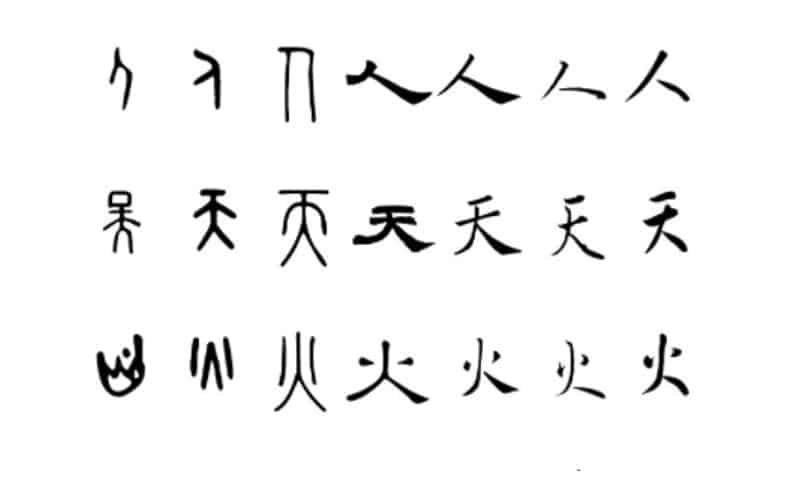
Chinese characters are built from three connected elements: shape, sound, and meaning. Once kids see that a character is a picture of something — a mouth (口), a person (人), the sun (日) — they stop seeing “scary symbols” and start seeing something closer to a drawing.
You don’t need to teach the full history of how characters evolved to get this across. A single sentence is enough: characters started out as simple pictures of real things, and many of the easiest ones still look like what they mean.
The Right Way to Choose Characters: A Curated Pool, Not a Fixed Order
Most character-learning apps and workbooks teach characters in order of stroke complexity — simplest first, most complex last. There’s a logic to that: it’s systematic, and it’s hard to accidentally skip something.
But stroke count isn’t necessarily a reliable predictor of how easily a child remembers a character. Just as important is whether it’s useful and meaningful to the child right now — a family member’s name, a food they eat, an animal they like.
So instead of working strictly from simplest to most complex, a better approach is:
What Age Should Kids Start Learning Characters?
Ages 3-6: Recognition Before Writing
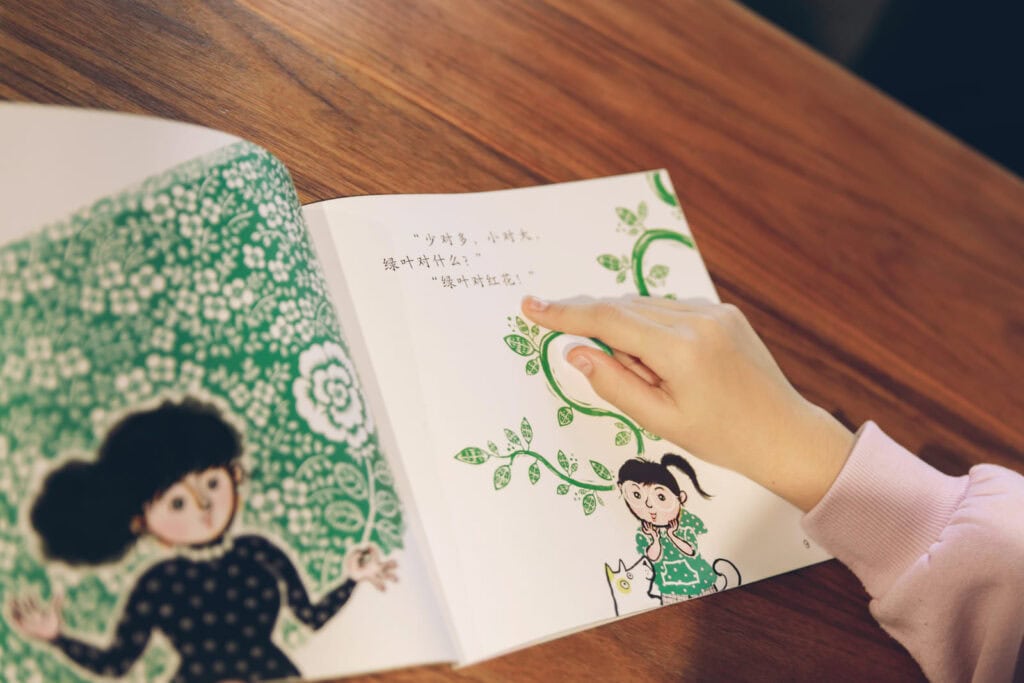
At this age, focus on recognizing characters rather than writing them. Point out simple, high-frequency characters in daily life — on flashcards, on labels around the house, in picture books. Writing can come later; recognition builds the foundation.
Ages 7-12: Recognition and Writing Together
Once a child is comfortable recognizing a solid set of characters, writing practice becomes more productive. This is also a good age to start introducing radicals — the building-block components that make up more complex characters — since understanding radicals helps kids guess the meaning and pronunciation of new characters more independently.
Ages 13-17: Structured, Goal-Oriented Learning
Older kids and teens usually benefit from a more systematic approach — one with clear levels, measurable milestones, and (for many families) a path toward exams like HSK, IGCSE, AP, or IB Chinese B.
No matter your child’s age or current level — from a first-time learner to someone prepping for HSK — our Online 1v1 programs cover the full range, with a level that matches where your child is starting from.
8 Easy Chinese Characters to Start With
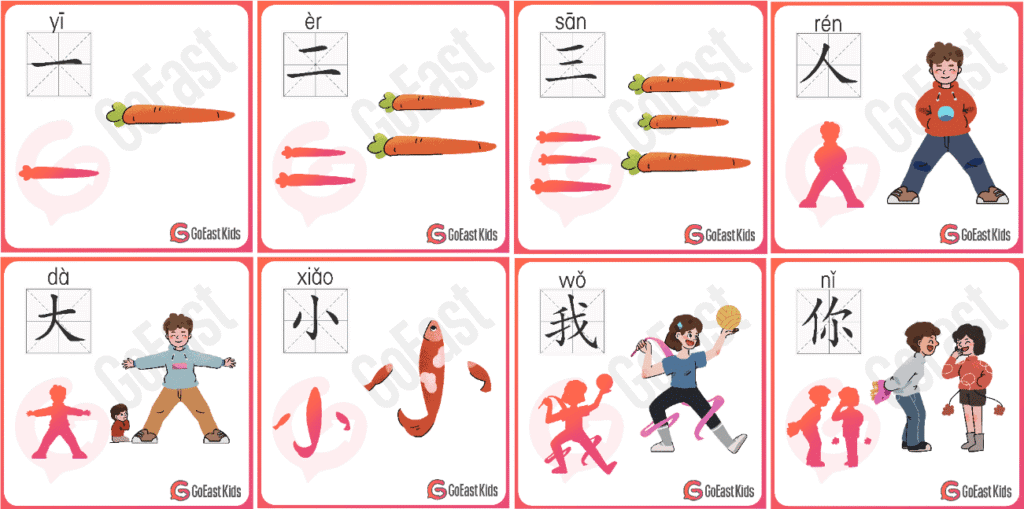
If you’re not sure where to begin, here are eight simple, high-frequency characters that make a good starting pool — not a required order:
- 一 (yī) — one
- 二 (èr) — two
- 三 (sān) — three
- 人 (rén) — person
- 大 (dà) — big
- 小 (xiǎo) — small
- 我 (wǒ) — I / me
- 你 (nǐ) — you
How to Teach Kids to Recognize vs. Write Characters
Recognition First
Recognition should come before writing. At this stage, the goal is simply for your child to see a character and connect it to its meaning — matching games (find the character that matches the picture) or pointing out characters your child already knows when you spot them out in the world both work well.
Writing Practice
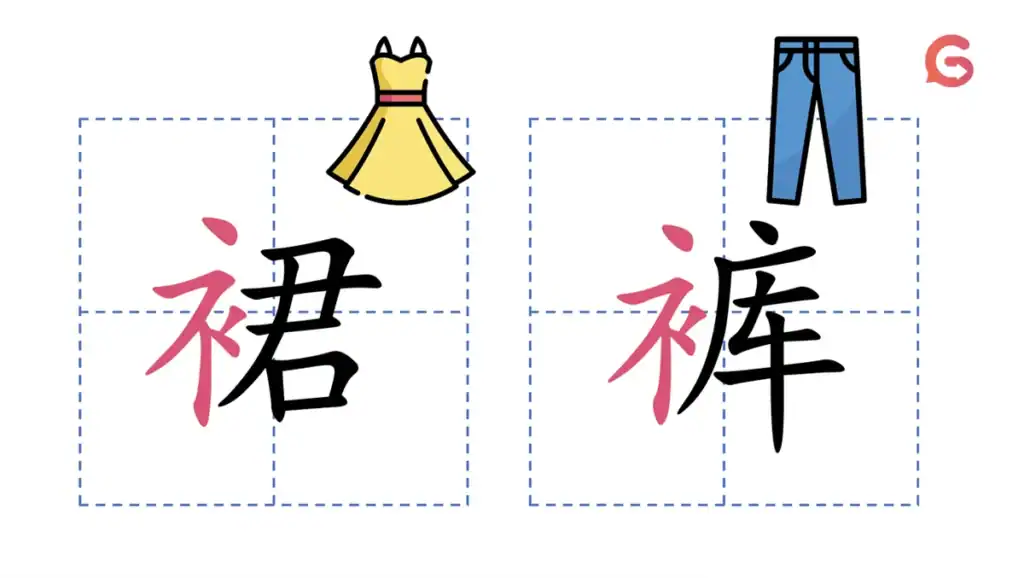
Once a character is familiar, introduce writing. Pay attention to stroke order and, for compound characters, point out the radical — the recurring component that carries meaning or sound clues. This becomes especially useful as kids move into more complex characters, since recognizing familiar components makes new characters faster to learn.
Writing doesn’t need to mean pencil and worksheet every time — see the next section for playful ways to practice both recognition and writing.
For Heritage Families: Keeping Characters Alive at Home
Many heritage families face a specific challenge: kids can speak Chinese fluently but can’t recognize or write the characters that go with the words they already know. This gap is common — and closing it doesn’t require starting from scratch.
The advantage heritage families have is a built-in high-frequency pool: characters for words your child already says every day. Start there, rather than with a generic beginner list, since your child already has the vocabulary and just needs the written form attached to it.
For Non-Heritage Families: Starting From Zero
If your child has no prior exposure to Chinese, the good news is that starting from zero doesn’t mean starting slow. Pick a small pool of characters tied to things your child already cares about in their everyday (English-speaking) world — animals, food, colors, family members — rather than an abstract “Chinese 101” character list.
Avoid the temptation to translate favorite English names or fictional characters into Chinese as a shortcut to interest — this often leads to characters that are rare or purely phonetic, and not useful beyond that one word.
Fun Ways to Practice (Games, Coloring, and Everyday Life)
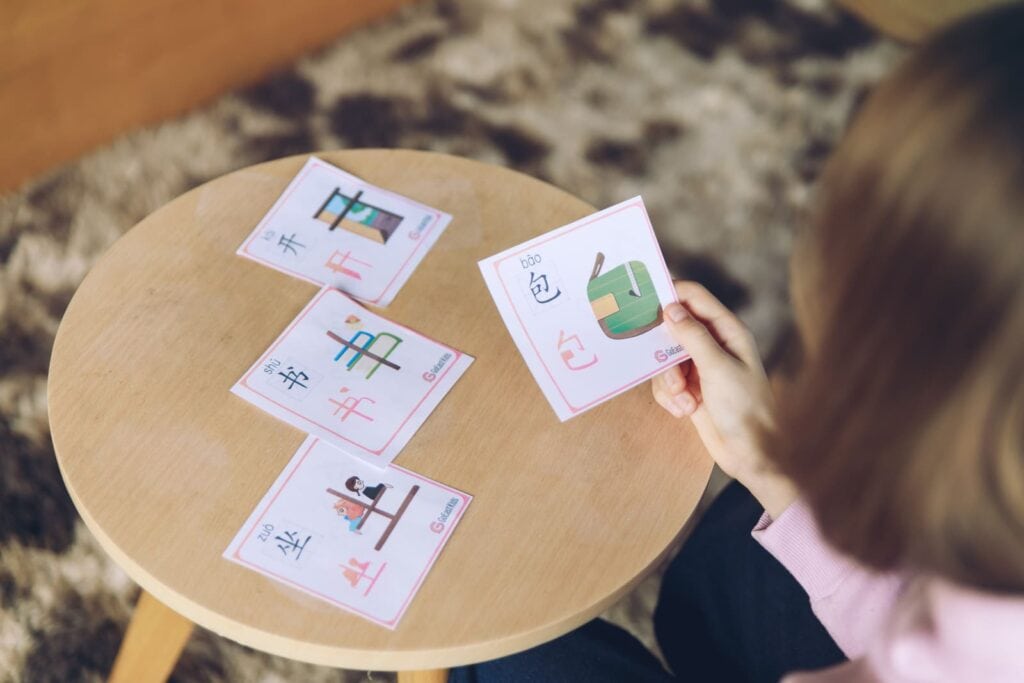
Games: Matching games, “true or false” character quizzes, and simple flashcard games keep practicing low-pressure.
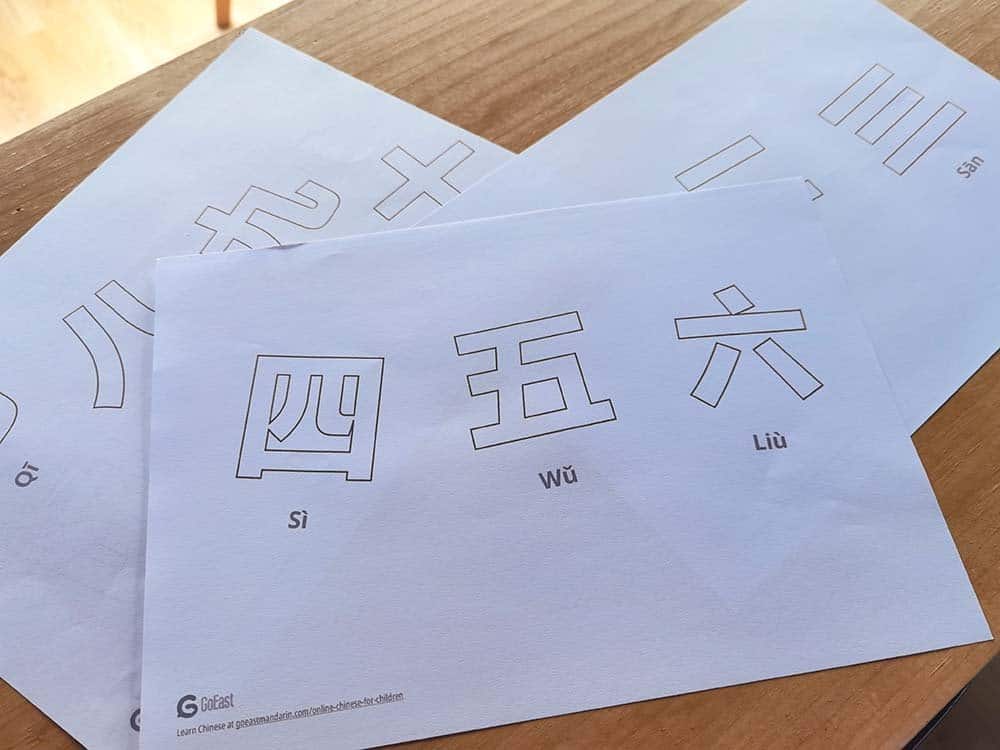
Coloring pages: A relaxed, screen-free way to spend time looking closely at character shapes. Click here to download this printable coloring page with Chinese characters for children. You can let your child color these characters with colors and illustrations they like. Feel free to share this on Instagram and tag us at @goeastkids
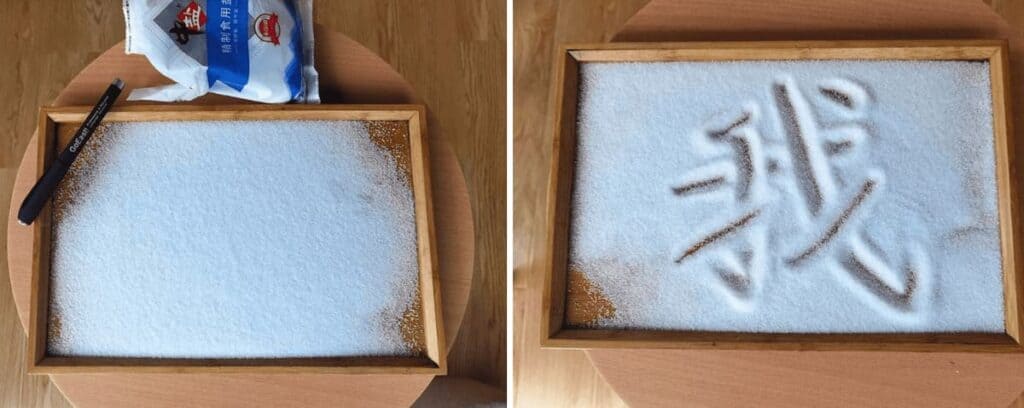
Salt or sand writing: Fill a shallow tray with salt or sand and let your child trace characters with a finger or a stick — mistakes disappear with a shake, so there’s no fear of “getting it wrong.”
Everyday life: Point out characters on menus, packaging, or signs when you’re out and about. Real-world repetition works better than flashcard drilling alone.
If you’d like more structured practice — stroke order animations, guided games, and repetition tools — take a look at our roundup of the best apps for learning Chinese, which we’ve tested and reviewed separately.
FAQ
Ready to Go Beyond Characters?
Learning to recognize and write characters is one part of the bigger picture — reading, speaking, and real conversation are what make it stick long-term.
Whether your child is just starting out, building confidence to speak, or preparing for exams — we have a structured program that fits.